Why I Finally Gave Pilates a Try – And Why It Changed Everything
I used to think Pilates was just slow stretching for people who didn’t like real workouts. Then chronic back tension and stiff mornings made me curious. I gave it an honest try—no judgment, just movement. What surprised me wasn’t just how strong and flexible I felt, but how much calmer and more aware of my body I became. This isn’t about extreme fitness; it’s about reconnecting with yourself. And honestly? I wish I’d started years ago.
The Ache That Started It All
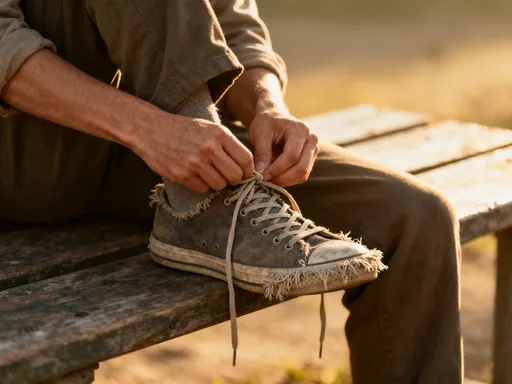
For years, lower back discomfort was just part of my daily rhythm—something I accepted like morning coffee or afternoon fatigue. Sitting for long stretches during work, driving kids to activities, and even standing in the kitchen felt like they were slowly tightening a knot just above my hips. At first, it was a dull ache I could ignore. But over time, the stiffness worsened. Mornings became harder. Bending to tie a shoe or reaching for a high shelf triggered sharp twinges. I’d pop pain relievers without thinking, stretch briefly, and carry on. I wasn’t injured, I told myself—just getting older.
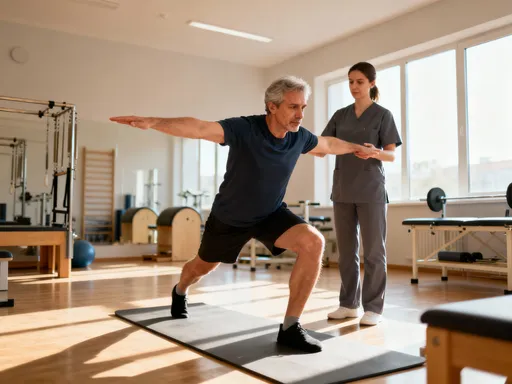
My attempts to fix it with more intense workouts only made things worse. I’d jump into brisk walks, strength training, or aerobics classes, hoping to strengthen my core and relieve the strain. But the repetitive motions and sudden movements often left me more sore than before. I’d feel better for a day, then slump back into discomfort. It wasn’t until I spoke with a physical therapist that I realized I wasn’t building support—I was straining what was already imbalanced. She didn’t suggest more effort; she suggested a different kind of movement. That’s when she mentioned Pilates.
What struck me most was her explanation: the body isn’t meant to be pushed into shape—it’s meant to be reeducated. My back pain wasn’t a sign of weakness, but of misalignment and muscle neglect. The deep core muscles, the ones that stabilize the spine and support posture, had been dormant for years. I was relying on larger, more superficial muscles to do a job they weren’t designed for. No amount of crunches or planks would fix that. What I needed wasn’t more force, but awareness and precision. That idea shifted my perspective completely.
What Pilates Actually Is (And What It Isn’t)
When most people hear “Pilates,” they picture a room full of women in leggings doing slow, graceful movements on mats. Some assume it’s just another form of yoga or a trendy workout for celebrities. Others dismiss it as too gentle to be effective. But Pilates is neither yoga nor ballet, and it’s certainly not limited by age, gender, or fitness level. It’s a system of controlled, intentional exercise developed in the early 20th century by Joseph Pilates, originally designed to rehabilitate injured soldiers and dancers. His method, which he called “Contrology,” emphasized the connection between mind and body through focused movement, breath, and alignment.
At its core, Pilates is about quality of movement, not quantity. Unlike high-intensity workouts that measure success by sweat and calories burned, Pilates measures progress by control, stability, and body awareness. Each exercise is designed to activate specific muscle groups—especially the deep core muscles like the transverse abdominis, pelvic floor, and multifidus—that act as the body’s internal support system. These muscles are rarely targeted in traditional gym routines, yet they’re essential for maintaining spinal health, preventing injury, and improving posture.
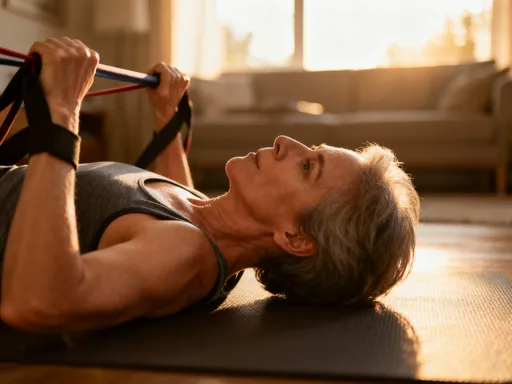
Another common misconception is that Pilates is only done on a mat. While mat-based Pilates is widely accessible and effective, many practitioners also use specialized equipment like the reformer, Cadillac, or stability chair. These tools use springs and resistance to guide movement, offering support or challenge depending on the individual’s needs. But even without equipment, the principles remain the same: precision, control, centering, flow, breath, and concentration. These aren’t just buzzwords—they’re the foundation of every session.
Why It Works: The Science Behind the Moves
What makes Pilates effective isn’t just how it feels, but what research shows it does. Multiple studies have demonstrated that regular Pilates practice leads to measurable improvements in posture, balance, flexibility, and spinal mobility. One 2015 review published in the Journal of Physical Therapy Science found that participants who practiced Pilates for eight weeks showed significant reductions in chronic low back pain and improved functional movement. Another study in the Journal of Orthopaedic & Sports Physical Therapy reported enhanced core endurance and postural control in adults who completed a 12-week Pilates program.
The reason lies in how Pilates engages the neuromuscular system. Unlike exercises that rely on momentum or large muscle groups, Pilates emphasizes slow, deliberate motions that require the brain to communicate more effectively with the muscles. This strengthens the mind-muscle connection, improving neuromuscular control—the body’s ability to recruit the right muscles at the right time. Over time, this leads to better coordination, reduced strain on joints, and more efficient movement patterns in daily life.
Additionally, Pilates activates the body’s stabilizing muscles—those deep, often overlooked fibers that support the spine and pelvis. While a typical crunch might engage the outer abdominal muscles, a Pilates “hundred” or “roll-up” recruits the deeper transverse abdominis, which acts like a natural corset for the torso. Strengthening these muscles doesn’t just improve appearance; it creates a more resilient foundation for all physical activity. This is especially important as we age, when muscle mass declines and postural imbalances become more pronounced.
My First Week: Awkward, But Eye-Opening
I’ll admit—my first few Pilates sessions were humbling. I thought I’d breeze through the beginner videos, but within minutes, I was struggling to coordinate my breath with movement. Simple exercises like the “saw” or “spine stretch” felt unfamiliar and awkward. My hamstrings were tight, my shoulders crept up toward my ears, and I had to pause constantly to reset my form. I wasn’t drenched in sweat, but I was mentally fatigued. It was like learning a new language with my body.
Yet, despite the awkwardness, I noticed subtle changes almost immediately. By the third day, my breathing felt deeper and more rhythmic. I caught myself sitting taller at my desk, shoulders relaxed, spine aligned. That week, I slept more soundly—no tossing or turning, no waking with a stiff neck. I didn’t feel dramatically stronger, but I felt more connected. One morning, while lifting groceries, I realized I wasn’t bracing my back the way I used to. I was moving with more control, more awareness. It wasn’t a dramatic transformation, but it was real.
What helped me push through the early frustration was understanding that Pilates isn’t about performance. There’s no leaderboard, no finish line. Progress isn’t measured in how many reps you do, but in how well you move. The goal isn’t to look a certain way, but to feel more at home in your body. Once I released the pressure to “get it right,” I began to enjoy the process. I stopped comparing myself to the instructor on screen and focused instead on how each movement felt. That shift—from outcome to experience—was the real breakthrough.
Building a Routine That Fits Real Life
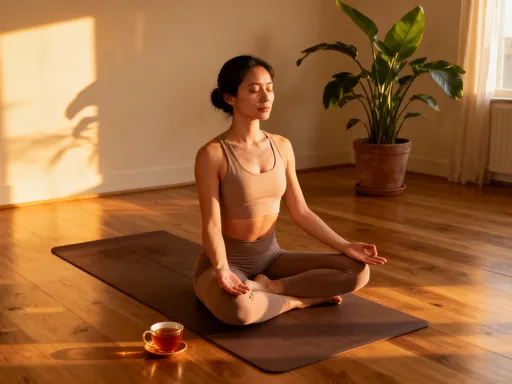
One of the biggest myths about fitness is that it has to be long or intense to be worthwhile. With Pilates, the opposite is true. Consistency matters far more than duration. I started with just ten minutes a day, using a beginner-friendly online video during my morning routine. I’d roll out my mat after brewing coffee, do a short sequence, and go about my day. On busy mornings, I’d save it for the evening, pairing it with calming music or a cup of herbal tea. The key was making it a non-negotiable part of my day, like brushing my teeth.
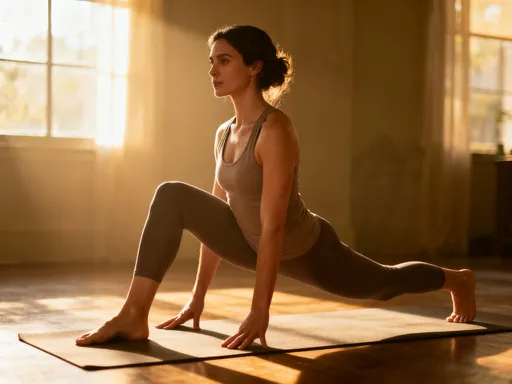
Over time, I increased to 20 or 30 minutes, three to four times a week. But even on days when I only had five minutes, I did something—just a few breath-focused core exercises or a gentle spine stretch. Those small moments added up. I learned that perfection isn’t the goal; showing up is. And because Pilates is low-impact and adaptable, it fits into life no matter your schedule or energy level. You don’t need a gym, special clothes, or expensive equipment. A mat and a quiet space are enough.
I also found it helpful to mix formats. Some days, I followed online classes. Other weeks, I joined a local studio for guided reformer sessions. The variety kept me engaged and allowed me to deepen my understanding of the movements. But the most important habit I built was listening to my body. Some days, I needed gentle mobility work. Other days, I craved more challenge. Pilates taught me to honor that—no guilt, no pressure. It’s not about pushing through pain, but moving with intention.
The Unexpected Perks Beyond the Body
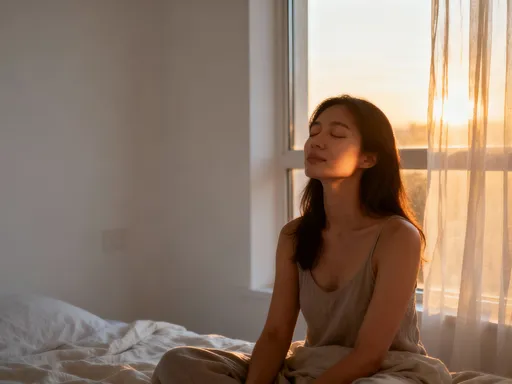
While the physical benefits were clear—less back pain, better posture, increased flexibility—I was surprised by how much Pilates improved my mental and emotional well-being. The focus on breath and alignment naturally led to a sense of mindfulness. Instead of rushing through movements, I learned to slow down, pay attention, and stay present. This quieted my mind in a way that meditation hadn’t. I wasn’t trying to clear my thoughts—I was simply anchoring them in movement.
Over time, this awareness spilled into other areas of my life. I noticed how I sat at my desk, how I stood in line, how I lifted my child or carried heavy bags. I became more conscious of my posture and movement patterns, correcting slouching or uneven weight distribution before they led to discomfort. This wasn’t obsessive—it was empowering. I felt more in tune with my body’s signals, more capable of responding with care.
There was also a quiet confidence that grew—not the kind that comes from fitting into smaller jeans, but from feeling strong and capable in my own skin. I no longer saw my body as something to fix or hide, but as a partner in daily life. This shift in mindset reduced my stress levels and improved my mood. On stressful days, a short Pilates session became a reset button—helping me release tension, regain focus, and return to my responsibilities with greater calm.
Making It Last: Turning Practice Into Habit
Like any healthy habit, maintaining a Pilates practice requires intention. There were weeks when life got busy—school events, family obligations, unexpected setbacks—and my routine slipped. But instead of abandoning it, I learned to adapt. I reminded myself that even five mindful minutes count. I kept a small journal to track how I felt each week—less pain, better sleep, more energy. These small victories reinforced my commitment.
I also found support by connecting with others. I joined an online community of Pilates enthusiasts, where we shared tips, challenges, and encouragement. Knowing I wasn’t alone in the journey made it easier to stay consistent. Some members were decades older, others were new moms or recovering from injuries. Their stories reminded me that Pilates isn’t about age or ability—it’s about showing up for yourself, no matter where you are.
The biggest lesson I’ve learned is that Pilates isn’t a quick fix. It’s not a 30-day challenge or a magic solution. It’s a lifelong practice of self-awareness and care. It won’t give you a six-pack or dramatic weight loss, but it will give you something more valuable: a deeper connection to your body, greater resilience, and the tools to move through life with less pain and more ease. It’s not about being perfect—it’s about being present.
Conclusion
Looking back, my journey from skepticism to appreciation wasn’t just about discovering a new form of exercise—it was about redefining what wellness means. Pilates taught me that movement doesn’t have to be punishing to be powerful. It showed me that strength isn’t just about lifting heavy weights, but about supporting yourself from within. And it reminded me that true health begins not with how we look, but with how we feel.
Today, Pilates is no longer something I “do”—it’s part of how I live. It’s in the way I stand, breathe, and move through my day. It’s in the quiet moments when I pause to check my posture or take a deep, grounding breath. It’s not about performance or appearance. It’s about presence—about showing up for myself, one mindful movement at a time. If you’ve ever dismissed Pilates as too slow or too gentle, I’d encourage you to reconsider. Sometimes, the softest movements make the strongest impact. And like me, you might just wonder why you didn’t start sooner.