Why HIIT Changed My Fitness Game — And Can Meet Your Health Standards
Have you ever felt like there’s not enough time to stay fit? I used to skip workouts, thinking I needed hours at the gym. Then I tried HIIT — high-intensity interval training. In just minutes a day, I saw real changes: more energy, better stamina, and improved body composition. It wasn’t magic — just science-backed effort. Now, I’m sharing how this efficient method aligns with real health standards and could actually fit your life.
The Time Crunch Dilemma: Why Traditional Workouts Fail for Busy Lives
For many women balancing work, family, and household responsibilities, finding time to exercise often feels impossible. The standard recommendation of 150 minutes of moderate aerobic activity per week, as outlined by major health organizations, can seem overwhelming when the day already overflows with obligations. Studies show that the average adult spends less than 30 minutes per week in structured physical activity — far below the guidelines. This gap isn’t due to lack of motivation, but rather a mismatch between expectations and real-life demands.
Traditional workouts often require long durations, gym memberships, and rigid scheduling. For someone managing school drop-offs, grocery runs, and evening meals, a 60-minute jog or spin class may simply not fit. This reality leads many to abandon fitness goals altogether, believing they lack the time or discipline. But what if effective exercise didn’t require hours? What if just 15 to 20 minutes, done a few times a week, could deliver measurable health benefits?
This is where high-intensity interval training (HIIT) enters as a practical alternative. Research consistently shows that HIIT can produce similar or even superior health outcomes compared to longer, steady-state workouts — in significantly less time. By alternating short bursts of intense effort with brief recovery periods, HIIT leverages the body’s natural physiological responses to deliver results efficiently. It’s not about replacing all forms of exercise, but offering a viable option for those who struggle to prioritize fitness.
The core principle of HIIT is simple: push hard for a short time, rest, and repeat. This structure makes it adaptable to various fitness levels and settings. Whether in a living room, backyard, or local park, the method doesn’t depend on equipment or space. For busy individuals, especially women managing multiple roles, this flexibility removes common barriers to consistency. The science supports it, and the real-world applicability makes it a sustainable choice.
What Exactly Is HIIT? Breaking Down the Science Simply
High-intensity interval training, or HIIT, is a structured form of exercise that alternates between periods of intense physical effort and low-intensity recovery or rest. Unlike steady-state cardio — such as walking or jogging at a constant pace — HIIT involves pushing the body close to its maximum capacity for brief intervals, typically ranging from 20 seconds to a few minutes, followed by a recovery phase. This cycle is repeated several times in a single session, usually lasting between 10 and 30 minutes.
The key difference lies in intensity and physiological response. During high-effort phases, the heart rate rises sharply, often reaching 80% to 95% of maximum capacity. This challenges the cardiovascular system in a way that moderate, continuous exercise does not. The recovery periods allow the body to partially reset, enabling repetition of the intense phase. This pattern creates a powerful stimulus for improvement in fitness and metabolic health.
One of the most significant benefits of HIIT is its effect on EPOC — excess post-exercise oxygen consumption. After a HIIT session, the body continues to consume oxygen at an elevated rate as it works to restore balance: replenishing energy stores, repairing muscle tissue, and lowering heart rate and temperature. This process increases calorie burn for hours after the workout ends, sometimes up to 24 hours. In contrast, steady-state cardio typically results in a shorter afterburn effect.
Another advantage is efficiency. Because of the high intensity, HIIT sessions are much shorter than traditional workouts while still delivering comparable or greater benefits. A 20-minute HIIT session can burn as many calories as a 40-minute jog — and often leads to greater improvements in cardiovascular fitness and insulin sensitivity. This makes it especially valuable for those with limited time.
Despite misconceptions, HIIT is not limited to sprinting, burpees, or elite athletes. It can be adapted using bodyweight movements, resistance bands, or simple equipment like a stationary bike or kettlebell. The intensity is relative to the individual, meaning a brisk walk up stairs can be high-intensity for one person, while another might use sprinting. This scalability ensures accessibility across fitness levels.
How HIIT Supports Key Health Standards: From Heart to Metabolism
HIIT is more than a tool for weight management — it directly supports several critical health markers recognized by medical and public health institutions. Cardiovascular health, metabolic function, and body composition are all positively influenced by consistent HIIT practice. These changes are not just cosmetic; they reduce the risk of chronic diseases such as type 2 diabetes, hypertension, and heart disease — conditions that disproportionately affect women as they age.
One of the most well-documented benefits of HIIT is its impact on heart health. Studies have shown that regular HIIT improves VO₂ max, a measure of the body’s ability to use oxygen during exercise and a strong predictor of cardiovascular fitness and longevity. In one clinical trial, sedentary middle-aged women who performed HIIT three times a week for 12 weeks increased their VO₂ max by an average of 15%, a significant improvement comparable to longer endurance training.
Blood pressure is another key indicator that responds to HIIT. Hypertension affects nearly half of adults, and exercise is a cornerstone of management. HIIT has been shown to reduce both systolic and diastolic blood pressure, likely due to improved vascular function and reduced arterial stiffness. These changes occur even without significant weight loss, highlighting the direct physiological benefits of the training style.
Metabolically, HIIT enhances insulin sensitivity, meaning the body becomes more efficient at using glucose for energy rather than storing it as fat. This is crucial for preventing insulin resistance, a precursor to type 2 diabetes. Research indicates that just two weeks of HIIT can improve insulin sensitivity in both healthy individuals and those with prediabetes. This effect is particularly valuable for women approaching menopause, when hormonal changes can increase insulin resistance and abdominal fat accumulation.
Speaking of fat, HIIT has a unique ability to target visceral fat — the deep abdominal fat surrounding internal organs. Unlike subcutaneous fat, visceral fat is metabolically active and linked to inflammation, heart disease, and metabolic syndrome. Multiple studies confirm that HIIT leads to greater reductions in visceral fat compared to moderate-intensity continuous exercise, even when total calorie expenditure is similar. This makes it a powerful strategy for improving long-term health outcomes.
Importantly, these benefits are achievable across fitness levels. Modifications in intensity, duration, and exercise selection allow beginners to start safely while still receiving physiological rewards. Medical supervision is advised for those with pre-existing conditions, but for most healthy adults, HIIT is a safe and effective option when performed with proper form and progression.
Real Results, Not Hype: What Changes to Expect (And When)
One of the most encouraging aspects of HIIT is the speed at which noticeable changes can occur. While long-term body composition shifts take weeks to months, many people report feeling different within days. The first sign is often increased energy. After just a few sessions, individuals frequently describe feeling more alert, less fatigued, and more capable of handling daily tasks. This boost is linked to improved circulation, enhanced mitochondrial function, and better sleep quality — all supported by HIIT.
Within two to four weeks of consistent practice, endurance begins to improve. Activities that once felt strenuous — climbing stairs, carrying groceries, or playing with children — become easier. This is due to the cardiovascular adaptations already underway: stronger heart contractions, increased stroke volume, and more efficient oxygen delivery. These changes are measurable and meaningful, contributing to a greater sense of physical capability.
Body composition changes typically become visible after four to eight weeks, assuming consistency and supportive nutrition. While the scale may not always reflect dramatic weight loss — especially if muscle mass is increasing — clothing may fit more loosely, particularly around the waist. This is consistent with research showing HIIT’s effectiveness in reducing abdominal fat while preserving or even building lean muscle, a combination that supports a healthy metabolism.
Beyond physical changes, many experience non-scale victories that are equally important. Improved sleep is commonly reported, likely due to the regulation of circadian rhythms and reduction in stress hormones. Mental clarity and mood stability also improve, possibly linked to increased production of brain-derived neurotrophic factor (BDNF), a protein that supports cognitive function and emotional resilience.
It’s important to emphasize that results depend on consistency, not perfection. Missing a session or adjusting intensity based on energy levels does not negate progress. In fact, listening to the body and allowing for rest enhances long-term success. HIIT is not about pushing to exhaustion every time; it’s about creating a sustainable rhythm that supports health over time.
Expectations should be realistic. HIIT is not a miracle cure or a substitute for balanced nutrition and overall lifestyle habits. But as a time-efficient, science-backed method, it delivers tangible improvements that align with established health standards. The changes are not flashy, but they are lasting — and deeply impactful.
Building Your First HIIT Routine: Simple, Safe, and Sustainable
Starting a HIIT routine doesn’t require special equipment, a gym membership, or prior fitness experience. A beginner-friendly approach focuses on low-impact movements, clear structure, and gradual progression. One of the most effective and widely studied formats is the 1:2 work-to-rest ratio — 20 seconds of effort followed by 40 seconds of rest, repeated for 8 to 10 rounds. This totals about 16 to 20 minutes, including a brief warm-up and cool-down.
A sample session might begin with a 3- to 5-minute warm-up of light movement — marching in place, arm circles, or gentle squats. Then, perform the following cycle: 20 seconds of jumping jacks (or modified step-outs for low-impact), 40 seconds of slow marching in place; 20 seconds of bodyweight squats, 40 seconds of rest; 20 seconds of standing knee lifts, 40 seconds of rest; 20 seconds of modified push-ups (on knees or against a wall), 40 seconds of rest. Repeat this sequence for 3 to 4 rounds.
Frequency is key. Starting with two sessions per week allows the body to adapt while minimizing the risk of overuse or burnout. As fitness improves, a third session can be added. It’s essential to include rest days between HIIT workouts, as recovery is when the body repairs and strengthens. Pairing HIIT with low-intensity activities like walking, stretching, or yoga supports overall balance.
Safety is paramount. Proper form matters more than speed or intensity. Beginners should focus on controlled movements, full range of motion, and steady breathing. If joint discomfort occurs, modifications should be made — for example, replacing jumping jacks with step-outs or squats with seated leg extensions. Staying hydrated and listening to the body’s signals are essential practices.
The goal is not to finish exhausted, but to finish stronger. Each session should leave you feeling accomplished, not drained. Over time, the same movements will feel easier, allowing for gradual increases in intensity — perhaps by adding a second round, shortening rest periods, or incorporating new exercises. This progressive approach builds confidence and ensures long-term adherence.
Customizing HIIT for Different Goals and Lifestyles
One of HIIT’s greatest strengths is its adaptability. Whether the goal is weight management, improved endurance, or general fitness, the structure can be tailored to meet individual needs. For weight management, combining HIIT with strength training two to three times a week enhances fat loss while preserving muscle. Sessions can include compound movements like squats, lunges, and push-ups to maximize calorie burn and metabolic impact.
For those seeking endurance, longer work intervals — such as 30 to 45 seconds — with shorter rest periods can be used. Cycling, brisk walking on an incline, or stair climbing are excellent options. These variations challenge the aerobic system while still benefiting from the interval format. Over time, this builds stamina and resilience for daily activities.
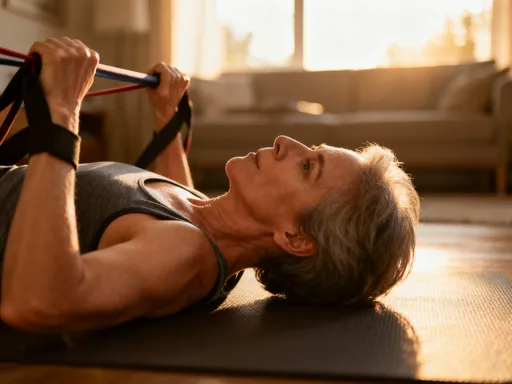
Lifestyle considerations also shape HIIT design. For women with joint sensitivities or mobility limitations, low-impact modifications ensure safety and comfort. Seated marches, arm raises with light weights, or resistance band exercises can provide effective intensity without strain. Water-based HIIT, such as interval swimming or aqua jogging, is another joint-friendly option.
Equipment can add variety and challenge. A stationary bike allows for precise control of resistance and timing, making it ideal for structured intervals. Kettlebells introduce strength and power elements, while resistance bands offer portability and versatility. Even household items — like a sturdy chair for step-ups or a filled water bottle as a weight — can enhance a routine.
The key to long-term success is enjoyment and flexibility. Routines should feel manageable and rewarding, not punishing. Rotating exercises, changing music, or doing sessions outdoors can keep motivation high. When HIIT fits seamlessly into life, it becomes a habit rather than a chore.
Staying Consistent: Turning HIIT Into a Lasting Habit
Motivation naturally fluctuates, especially when life gets busy. The transition from occasional effort to consistent practice is where many struggle. The secret to long-term success isn’t willpower — it’s strategy. One effective approach is tracking non-physical wins: noting improved energy, better sleep, or increased confidence in daily movement. These subtle shifts reinforce the value of exercise beyond appearance.
Scheduling HIIT like any important appointment increases follow-through. Choosing a consistent time — such as before breakfast, during a lunch break, or after the kids’ bedtime — creates routine. Pairing it with a habit already in place, like morning coffee or evening stretching, strengthens the association.
Accountability also helps. Sharing goals with a friend, joining an online community, or using a simple journal can provide encouragement. Celebrating small milestones — completing a week, mastering a new exercise, or noticing improved stamina — builds momentum.
Most importantly, consistency should be framed as self-care, not punishment. HIIT is not about shrinking the body, but about strengthening it — for health, vitality, and longevity. Each session is a step toward greater resilience, independence, and well-being. Over time, the benefits compound: stronger bones, healthier blood pressure, better metabolism, and improved mental clarity.
In a world that often demands so much from women, HIIT offers a way to reclaim time and energy. It’s not a trend, but a practical, evidence-based tool for lifelong wellness. By working smarter, not longer, it aligns with real health standards and real lives. The journey isn’t about perfection — it’s about showing up, one interval at a time.