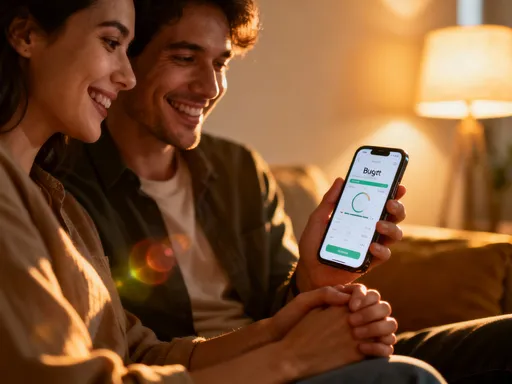
It’s not just about tracking spending: These apps actually help my partner and I grow closer
Have you ever argued with your partner about money? We have. What started as a small comment about a coffee purchase turned into a full-blown tension. That’s when we discovered spending reminder apps—not as cold budget tools, but as quiet mediators in our relationship. They didn’t just show us where our money went; they opened honest conversations, built shared goals, and brought peace. This is how technology quietly strengthened our bond.
The Real Cost of Money Misalignment in Relationships
I still remember the night it happened. I came home from a long day at work, tired and craving comfort. I stopped by the grocery store and picked up a few things—some fresh vegetables, a new pasta sauce, and yes, a small tub of my favorite ice cream. Nothing extravagant. But when I got home, my partner looked at the receipt and said, ‘We really needed that?’ It wasn’t said harshly, but something about the tone stung. I felt judged. And then, without meaning to, I snapped back, ‘Well, what about that pair of hiking boots you bought last week? You didn’t tell me about those.’ And just like that, a quiet evening turned into a tense standoff.
That moment wasn’t really about ice cream or boots. It was about something deeper—misalignment. We weren’t on the same page about what we were spending, why, or how much was ‘okay.’ And we weren’t alone. Studies show that money is one of the top sources of conflict in relationships, not because people are reckless, but because financial habits are often invisible. We each had our own way of managing money—mine was more spontaneous, his was more planned—but without transparency, small choices started to feel like personal betrayals.
What I didn’t realize then was that the problem wasn’t our spending. It was our silence. We weren’t talking about money because we were afraid of conflict. But by avoiding the conversation, we were actually creating more tension. Every unspoken purchase built up like invisible debt—emotional debt. And over time, that debt started to erode trust. We weren’t just disagreeing about money; we were starting to feel like we weren’t truly on the same team.
How Spending Reminder Apps Became Our Relationship Co-Pilots
Everything changed when a friend mentioned she and her husband used a simple app to track their spending—not to control each other, but to stay connected. At first, I was skeptical. The idea of ‘monitoring’ each other’s purchases sounded intrusive, even a little cold. But she explained it differently. ‘It’s not about watching,’ she said. ‘It’s about knowing. It’s like having a shared dashboard for our life together.’
We decided to try it—not as a fix, but as an experiment. We picked an app that linked to both of our accounts and automatically categorized our spending. Within days, something shifted. When my partner bought a new set of kitchen knives, I got a gentle notification. Instead of feeling blindsided, I thought, ‘Oh, that’s why we’re eating better this week.’ When I ordered a new yoga mat, he smiled and said, ‘Looks like you’re getting back into your routine—love that.’ The app didn’t just track money; it gave context to our choices.
What surprised me most was how it changed the tone of our conversations. Before, talking about money felt like an interrogation: ‘Where did this charge come from?’ Now, it felt more like checking in: ‘Hey, saw the coffee shop charge—long morning?’ That small shift—from suspicion to curiosity—made all the difference. The app didn’t replace communication; it made it easier, lighter, and more compassionate. It became our co-pilot, quietly helping us navigate decisions without the drama.
From Silent Resentment to Shared Goals
One of the most powerful moments came when we looked at our monthly report together. The app showed us something we hadn’t seen before: we were both spending a lot on convenience. Takeout on busy nights. Delivery fees. Last-minute grocery runs when we were too tired to cook. Individually, each purchase made sense. But together, they added up—both in money and in missed opportunities to connect.
Instead of blaming each other, we looked at the data and laughed. ‘We’re basically paying a convenience tax,’ I said. ‘And we’re both guilty.’ That moment opened the door to a real conversation. We asked ourselves: what if we used that money for something we both loved? What if we planned meals together? What if cooking became something we did as a team, not a chore I resented or he avoided?
We set a joint goal: reduce food-related spending by 25% over the next two months. But we didn’t just cut back—we got creative. We started meal prepping on Sundays, playing music and taking turns picking recipes. We challenged ourselves to use up leftovers in fun ways. And slowly, something beautiful happened: the kitchen, once a source of stress, became a place where we connected. We weren’t just saving money—we were rebuilding intimacy, one shared meal at a time.
Building Trust Through Transparency, Not Surveillance
I know what some of you might be thinking: doesn’t this feel like spying? Doesn’t it kill spontaneity? I asked myself the same thing. But here’s what I’ve learned—transparency only feels like surveillance when it’s one-sided or used as a weapon. When it’s mutual, respectful, and grounded in care, it feels like safety.
We made a few ground rules from the start. First, no judgment for small treats. If I wanted a $5 latte, that was mine to enjoy—no questions asked. The app wasn’t about policing little joys; it was about understanding patterns. Second, we agreed to focus on trends, not single purchases. A surprise dinner out wasn’t a problem—it was the habit of dining out four times a week that we wanted to examine together.
And here’s the thing: when we both had access, when we both opted in, it didn’t feel like control. It felt like partnership. When I saw a notification that my partner had booked a massage, I didn’t worry about the cost—I thought, ‘He’s taking care of himself. Good.’ When he saw I’d bought tickets to a workshop I’d been talking about, he texted, ‘So proud of you.’ The app became a way to support each other, not monitor each other. It wasn’t about tracking every penny—it was about knowing we were both looking out for the bigger picture.
Practical Tips for Starting the Conversation Without Conflict
If you’re thinking about trying this with your partner, I get it—bringing up money can feel risky. You don’t want to imply that they’re irresponsible or that you don’t trust them. So how do you start?
First, pick the right moment. Don’t bring it up after a fight or when someone’s stressed. We waited for a quiet Sunday morning, over coffee, when we were both relaxed. I started by saying, ‘I’ve been thinking—what if we tried something new to help us feel more in sync about money? Not because anything’s wrong, but because I’d love for us to feel more connected.’
Then, frame it as an experiment. We said, ‘Let’s try this for two weeks. If it doesn’t feel good, we’ll stop. No pressure.’ That made it feel low-stakes. We also chose an app that felt simple and friendly—not like a bank statement, but like a tool for teamwork. And most importantly, we started with curiosity, not criticism. Instead of saying, ‘You spend too much,’ I said, ‘I’ve noticed we both make small purchases that add up. What if we explored that together?’
One of the most helpful things was using real, everyday language. We didn’t talk about ‘budgeting’ or ‘financial discipline.’ We talked about ‘feeling more in control,’ ‘saving for things we love,’ and ‘avoiding those tense moments about money.’ When the conversation was about our shared values—not blame—it became something we wanted to do, not something we had to do.
Choosing the Right App for Your Relationship Rhythm
Not every app works for every couple. We tried a few before finding one that felt right. The first one we used was too detailed—every transaction came with a breakdown of categories, percentages, and projections. It felt heavy, like homework. The second was too basic—just a list of charges with no context. What we wanted was something in the middle: simple enough to use every day, but meaningful enough to spark conversation.
The one we settled on had a few key features. First, it sent gentle, real-time notifications—just enough to keep us informed without overwhelming us. Second, it had a shared dashboard where we could see our spending at a glance, color-coded and easy to read. Third, it allowed us to set joint goals with progress bars—like a game we were winning together. And finally, it gave us control over privacy. We could choose what to share and what to keep private, which made it feel respectful, not invasive.
The truth is, the app itself wasn’t magical. What made it work was how we used it. We didn’t treat it as a strict rulebook. We treated it as a conversation starter. We’d look at the dashboard together once a week, not to audit each other, but to check in. ‘Looks like we’re close to our grocery goal,’ one of us would say. ‘Want to try one more meatless meal this week?’ It became part of our rhythm—like asking, ‘How was your day?’ but for our shared life.
When Tech Meets Heart: The Unexpected Emotional Payoff
The biggest surprise wasn’t how much money we saved—it was how much closer we felt. Over time, the tension around money faded. We stopped keeping mental tabs on each other’s spending. We stopped assuming the worst when a charge appeared. Instead, we started assuming the best.
And with that space, something beautiful grew. We started dreaming together. We used the money we saved to plan a weekend getaway—just the two of us, no kids, no distractions. When we hit our goal, we celebrated with a toast, not because we’d been ‘good,’ but because we’d done it together. That small win felt huge.
But beyond the trips and the savings, what stayed with me was the emotional clarity. When money stops being a source of stress, you have more room for everything else—love, laughter, quiet moments. We weren’t just managing our finances; we were nurturing our relationship. The app didn’t create our connection—it revealed it. It showed us that we were on the same team, that we could face challenges together, and that even something as practical as spending could become an act of care.
Conclusion
These apps didn’t just save us money—they saved us from misunderstandings that could have grown into deeper rifts. They didn’t replace love or trust; they strengthened them. By bringing visibility to our choices, they helped us communicate with kindness instead of fear. By setting shared goals, they gave us something to grow toward together. And by creating space for honesty, they deepened our connection in ways I never expected.
Technology, when used with care, can do more than track numbers; it can help love last longer. It won’t solve every challenge in a relationship—but it can remove one of the biggest sources of silent strain. And in a world where life moves fast and stress runs high, that’s a gift. If you’ve ever felt that quiet tension around money, I encourage you to try something new. Not because you’re failing, but because you want to thrive. Because you deserve to feel aligned, supported, and truly partnered. And sometimes, the smallest tool can help you take the biggest step forward—together.