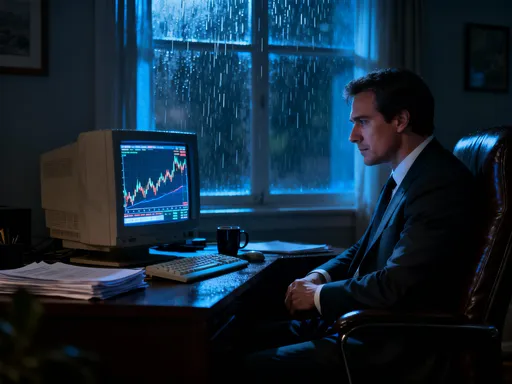
How I Built a Winning Team That Nailed Our Investment Strategy
What if the secret to smart investment layout isn’t just about numbers—but about people? I learned this the hard way. After pouring time into spreadsheets and market trends, it was our team dynamics that made or broke the results. This is how we aligned skills, mindsets, and roles to turn vision into action—without burning out or missing opportunities. It’s not just finance; it’s human strategy in motion.
The Hidden Cost of a Misaligned Team
Many startups and small investment groups focus heavily on capital allocation, market timing, and risk modeling, yet they consistently underestimate one critical variable: team alignment. The cost of misalignment is rarely captured on a balance sheet, but its impact is real and measurable in delayed decisions, duplicated work, and missed opportunities. I’ve seen technically brilliant teams fail—not because of flawed financial models, but because of fractured communication, overlapping responsibilities, and unclear ownership. In one case, two members independently analyzed the same emerging market opportunity, unaware of each other’s work, leading to wasted effort and contradictory recommendations. The result? A three-week delay in decision-making, during which the market shifted and the window closed.
This kind of inefficiency isn’t just frustrating—it’s expensive. When roles are ambiguous, accountability dissolves. Without a clear chain of ownership in the investment layout process, even urgent decisions can stall in endless discussion loops. Some team members overcommit, trying to fill gaps, while others underperform, waiting for direction. The financial consequences compound quickly: missed entry points, prolonged holding periods due to indecision, and reactive rather than strategic portfolio adjustments. These aren’t isolated incidents; studies in organizational behavior show that teams with poorly defined roles experience up to 30% longer decision cycles and a 25% higher rate of execution errors.
The deeper issue lies in how investment teams are often assembled. Founders tend to prioritize technical expertise—someone who can build a discounted cash flow model or interpret macroeconomic indicators—without considering how that person fits into the broader decision-making ecosystem. But finance is not a solo sport. It’s a coordinated effort where timing, clarity, and mutual trust determine outcomes as much as analytical precision. A misaligned team may generate excellent insights, but if those insights aren’t synthesized, communicated, and acted upon efficiently, their value diminishes rapidly. The real cost of misalignment isn’t just lost time or duplicated effort—it’s the erosion of confidence in the team’s ability to execute under pressure.
Over time, this undermines morale and increases turnover, especially among high-performing individuals who thrive on clarity and impact. When talented people feel their contributions are ignored or overwritten, they disengage. The team becomes reactive rather than proactive, responding to market shifts instead of anticipating them. In fast-moving investment environments—whether in private equity, real estate, or public markets—this lag can be fatal. The lesson is clear: no amount of capital or data can compensate for a team that isn’t operating in sync. Investment success depends not only on knowing where to allocate resources, but on having a team structure that ensures those decisions are made swiftly, confidently, and consistently.
Defining the Core Roles in Investment Layout
One of the most transformative steps we took was defining three core roles within our investment team: the Strategist, the Analyst, and the Executor. This wasn’t about job titles or hierarchy—it was about clarifying function, responsibility, and decision rights. Each role serves a distinct purpose in the investment lifecycle, and when properly separated, they create a system of checks, balance, and momentum. The Strategist operates at the highest level, focusing on long-term vision, opportunity mapping, and portfolio alignment. Their primary questions are strategic: Where should we be investing? Why this sector, this region, this asset class? They monitor macro trends, assess competitive landscapes, and ensure every proposed investment supports the overarching financial goals.
The Analyst, by contrast, dives into the details. They test the Strategist’s assumptions with hard data, conducting due diligence, modeling cash flows, stress-testing scenarios, and evaluating risk-adjusted returns. Their work turns vision into validation. They ask: Is this opportunity as strong as it appears? What are the downside risks? How does it compare to alternatives? Without a rigorous analyst, even the most compelling strategy can lead to poor outcomes. But the Analyst’s role is not to make the final call—it’s to inform it with evidence. This distinction is crucial. When Analysts are expected to also make strategic decisions, they often become overly cautious, prioritizing data completeness over timeliness, which slows down execution.
The Executor bridges the gap between analysis and action. Once a decision is made, the Executor takes ownership of implementation: structuring deals, managing timelines, coordinating legal and financial documentation, and reporting progress to stakeholders. They ensure that approvals are secured, funds are deployed on schedule, and post-investment monitoring is in place. This role requires strong project management skills, attention to detail, and the ability to navigate operational complexity. When the Executor is unclear or absent, even approved investments can stall in administrative limbo—what we call “decision debt.”
Forcing one person to wear all three hats is a recipe for burnout and blind spots. A Strategist forced to execute may overlook operational risks. An Analyst asked to lead strategy may struggle with big-picture thinking. An Executor without clear direction may prioritize speed over alignment. By formally defining these roles early, we eliminated role confusion and created clear accountability. Each team member knew their domain of responsibility and where they needed to collaborate. This structure also made onboarding smoother, as new members could be slotted into a defined function rather than expected to figure out their role through trial and error. More importantly, it allowed us to scale without sacrificing clarity—because as the team grew, the core roles remained constant, providing stability amid change.
Hiring for Fit, Not Just Skills
Early in our journey, we made the classic mistake of hiring based almost entirely on technical credentials. We brought on a senior analyst with an impressive background: top-tier education, years of experience at a major financial institution, and deep expertise in quantitative modeling. On paper, he was perfect. In practice, he struggled to integrate. His decision-making style was highly risk-averse, favoring exhaustive data collection over timely action. While this approach has merit in certain contexts, it clashed directly with our growth-oriented strategy, which required calculated risks and rapid iteration. Meetings became bogged down in requests for more data, more simulations, more validation—even when the available evidence was already strong. Key investment decisions were delayed, and momentum began to stall.
This experience taught us a critical lesson: technical skill is necessary, but cultural and cognitive fit is what determines long-term success. We shifted our hiring process to prioritize alignment in three key areas: decision-making style, risk tolerance, and communication rhythm. We no longer ask candidates to solve complex financial models in isolation. Instead, we use scenario-based interviews that simulate real investment dilemmas. For example, we present a time-sensitive opportunity with incomplete data and ask how they would proceed. Do they seek more information, or do they make a provisional decision based on available insights? Their response reveals not just competence, but judgment and mindset.
We also assess how candidates handle disagreement. In one exercise, we introduce conflicting viewpoints among interviewers and observe whether the candidate seeks consensus, dominates the conversation, or facilitates a structured discussion. This helps us identify individuals who can engage in healthy debate without damaging team cohesion. We look for people who are intellectually curious, open to feedback, and comfortable with ambiguity—qualities that matter more in dynamic investment environments than rigid adherence to process.
Another important factor is communication rhythm. Some professionals thrive in fast-paced, iterative environments where decisions are made quickly and adjusted as new information emerges. Others prefer deliberate, methodical processes with extensive documentation and approval layers. Neither is inherently better, but they must match the team’s operating tempo. We found that misalignment here leads to frustration on both sides: faster-moving team members see the slower ones as bottlenecks, while the latter perceive the former as reckless. By evaluating fit early, we avoid these friction points and build a team that moves at a shared pace. Skill gaps can be addressed through training, mentorship, or tools. But misaligned values, risk preferences, or communication styles are far harder to correct—and they often lead to quiet disengagement or turnover. Investing in fit upfront saves significant cost and disruption down the line.
Building Trust Through Transparent Processes
Trust is often treated as a soft, intangible quality—something that develops over time through shared experiences or team-building activities. But in high-stakes financial environments, trust cannot be left to chance. We discovered that the most reliable way to build trust is through transparent, consistent processes. Our turning point came after a major disagreement over an international real estate investment. Two senior team members presented compelling but opposing analyses. The decision was delayed for weeks, not because the data was unclear, but because each side questioned the other’s assumptions—and no one knew how the final call would be made. The lack of process created suspicion, eroded confidence, and ultimately damaged collaboration.
In response, we implemented a structured decision-review framework. Every significant investment decision is now documented in a standard format that includes the opportunity overview, key assumptions, risk assessment, dissenting views, and the final rationale. These documents are shared with the entire team before the decision is finalized. We also hold weekly review meetings where past decisions are revisited, especially those that didn’t perform as expected. Rather than assigning blame, we focus on what was known at the time, what signals were missed, and how the process can be improved. This transparency reduces second-guessing and fosters psychological safety—team members know their input will be recorded and considered, even if it doesn’t win the day.
Another powerful tool we use is role rotation. On major projects, we rotate the lead position among qualified team members. For example, the Analyst might lead the due diligence phase, the Strategist the opportunity pitch, and the Executor the implementation plan. This practice builds empathy, as each person experiences the challenges of other roles. It also prevents power concentration and encourages collective ownership. Over time, this has cultivated a culture where accountability is not feared but embraced. Team members don’t wait for permission—they act within their mandate, knowing that their decisions will be reviewed fairly and constructively.
Transparency also extends to performance metrics. We track not just financial returns, but team-level indicators like decision cycle time, execution accuracy, and stakeholder satisfaction. These metrics are shared openly, allowing the team to see how their processes impact outcomes. When people understand how their work contributes to results, they take greater ownership. Trust, in this context, is not about personal likability—it’s about confidence in the system. When everyone sees that decisions are made fairly, documented clearly, and reviewed objectively, trust becomes the default, not the exception.
Balancing Speed and Caution in Decision-Making
In investment management, timing is everything. Move too quickly, and you expose the portfolio to avoidable risks. Move too slowly, and you miss opportunities that may not come again. The challenge is not choosing between speed and caution, but integrating both into a coherent process. We learned this after missing two high-potential ventures—one because we moved too fast without proper due diligence, another because we over-analyzed and entered too late. Both outcomes were costly, but they pointed to the same root issue: a lack of structured decision pathways.
Our solution was a two-track system: one for rapid exploration, and another for structured evaluation. The exploration track is designed for early-stage opportunities with high uncertainty. Small, cross-functional teams are empowered to investigate with minimal resources—conducting initial market scans, reaching out to industry contacts, or running quick financial simulations. The goal is not to make a final decision, but to determine whether the opportunity warrants deeper analysis. These explorations are time-boxed, typically lasting no more than two weeks. If the findings are promising, the opportunity moves to the evaluation track.
The evaluation phase follows a rigorous, standardized process. It includes full due diligence, third-party validation, scenario modeling, and stakeholder review. Only at this stage is significant capital or executive time committed. This two-tier approach allows us to be agile without sacrificing discipline. We can test many ideas quickly, discarding weak ones early, while reserving our most thorough analysis for the strongest candidates. It also prevents analysis paralysis—because the initial bar for exploration is low, we don’t feel pressure to have all the answers upfront.
Speed, in this model, comes from clarity of process, not recklessness. Team members know exactly what is expected at each stage, reducing hesitation and debate over next steps. We’ve found that this system shortens our average decision cycle by 40% while improving the quality of final choices. It also encourages innovation, as team members feel safe proposing unconventional ideas without fear of immediate rejection. The key insight is that speed and caution are not opposites—they are complementary forces that, when balanced, create a more resilient and responsive investment process.
Managing Conflict as a Performance Tool
For years, we treated conflict as a problem to be avoided. We valued harmony, consensus, and smooth meetings. But we eventually realized that the absence of disagreement was not a sign of unity—it was a warning sign of groupthink. Our most costly investment mistake occurred when everyone nodded in agreement during a strategy session, only for several members to later admit they had serious reservations but didn’t speak up. The deal underperformed, and the silence that preceded it was a major contributor.
We shifted our approach to view conflict not as a threat, but as a source of insight. We now actively encourage constructive debate through structured feedback sessions. Before finalizing any major decision, we hold a dedicated “challenge round” where team members are invited to question assumptions, highlight risks, and propose alternatives. To ensure balanced participation, we assign rotating “devil’s advocate” roles in planning meetings. This person is tasked with identifying potential flaws in the proposed strategy, not to block progress, but to strengthen it. Over time, this practice has normalized dissent and reduced the emotional charge around disagreement.
We also reframe conflict as data. When two team members disagree on a valuation model, for example, we don’t see it as a personal clash—we see it as two valid perspectives that reveal uncertainty in the underlying assumptions. We document these differences and use them to refine our analysis. This approach has led to more robust investment theses and better risk mitigation. It also increases buy-in, because even those who initially opposed a decision feel heard and respected. When people know their concerns have been considered, they are more likely to support the final outcome, even if it differs from their preference.
The goal is not to eliminate conflict, but to channel it productively. We measure success not by how quickly we reach agreement, but by how thoroughly we examine options before deciding. This cultural shift didn’t happen overnight—it required consistent modeling from leadership, psychological safety training, and recognition of those who speak up. But the payoff has been clear: sharper decisions, stronger team cohesion, and a more adaptive investment process. In an industry where uncertainty is constant, the ability to debate openly and align decisively is one of our greatest advantages.
Scaling the Team Without Losing Focus
As our investment portfolio grew, so did the team. We expanded from five to over twenty members across research, execution, and oversight functions. With growth came a new challenge: maintaining alignment without becoming bureaucratic. Early on, every decision required full team consensus, which worked when we were small but quickly became unsustainable. Meetings grew longer, decision cycles slowed, and innovation began to stagnate. We risked losing the agility that had been our competitive edge.
To address this, we adopted a “core-plus-cluster” operating model. The core team—comprising the Strategist, lead Analyst, and chief Executor—retains responsibility for overall strategy, portfolio balance, and major capital allocations. They meet weekly to review performance, assess new opportunities, and set priorities. Around this core, we formed specialized clusters: one for real estate, another for private equity, and a third for public market investments. Each cluster operates with autonomy in execution but aligns regularly with the core to ensure strategic coherence.
This structure allows us to scale without diluting focus. Clusters can move quickly within their domains, using tailored processes and metrics, while the core ensures that all activities support the broader financial goals. We also hold monthly cross-cluster syncs to share insights, prevent silos, and identify synergies. For example, risk patterns observed in the real estate cluster might inform adjustments in the private equity strategy. These exchanges enrich our collective knowledge and strengthen decision-making across the board.
To maintain cultural continuity, we invest in onboarding and ongoing development. New hires go through a structured integration program that covers not just technical skills, but our decision-making framework, communication norms, and conflict resolution practices. We also rotate team members across clusters for short-term assignments, fostering broader understanding and stronger relationships. This model has allowed us to grow to a much larger scale while preserving the clarity, trust, and alignment that made our early success possible. Scaling isn’t just about adding people—it’s about designing systems that preserve what works while enabling sustainable growth.
Conclusion
Great investment layout isn’t just about asset allocation—it’s about human alignment. The right team doesn’t just follow a plan; they shape it, challenge it, and execute it with ownership. Our journey taught us that financial outcomes are deeply influenced by team structure, communication quality, and decision processes. By clearly defining roles, prioritizing fit over raw skill, building transparent systems, and embracing constructive conflict, we turned our team into a strategic advantage. Speed and caution are not trade-offs when supported by the right framework. Trust is not a feeling—it’s the product of consistent, fair processes. And growth doesn’t have to mean losing focus, as long as structure evolves with scale. In finance, where uncertainty is constant, your people may be the most reliable asset you have. The numbers matter, but the team behind them matters more.