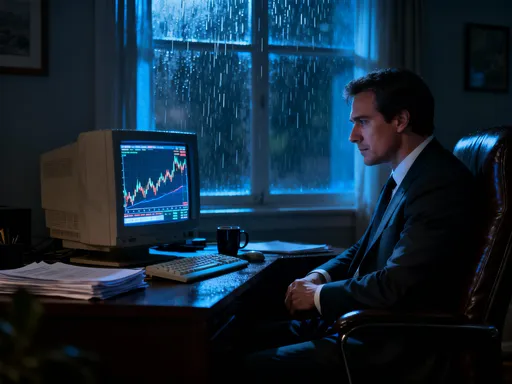
How I Protected My Portfolio When Illness Hit—A Real Talk Guide
What happens to your investments when life throws a curveball—like a sudden illness? I learned the hard way. One day I was managing my portfolio actively; the next, I was bedridden, stressed, and worried about money. That’s when I realized: a solid investment strategy isn’t just about returns—it’s about resilience. This is how I restructured my portfolio to survive the unexpected, and what you can learn from my experience. Health emergencies don’t come with warning labels, and neither do their financial consequences. When your ability to work, decide, or even focus is compromised, your investments must stand on their own. This is not about chasing high yields or timing the market. It’s about building a financial structure that holds steady when you cannot.
The Wake-Up Call: When Health Crashed My Financial Plan
The call came on a Tuesday morning. A diagnosis I wasn’t ready for—something chronic, not immediately life-threatening, but life-altering. Within days, my energy dropped, my schedule filled with appointments, and my ability to concentrate vanished. I had always taken pride in managing my investments: reviewing quarterly reports, adjusting allocations, rebalancing when needed. But now, even opening my brokerage account felt overwhelming. I missed a dividend reinvestment deadline. I failed to notice a sector downturn that affected one of my larger holdings. And worst of all, I started to panic—not just about my health, but about my finances. That’s when it hit me: my portfolio was built for a healthy, active version of myself—one who had time, focus, and emotional stability. It wasn’t designed for illness, fatigue, or uncertainty.
What I experienced is more common than many realize. Financial planning often assumes continuity—steady income, consistent decision-making, and long-term visibility. But real life doesn’t follow a spreadsheet. A sudden illness can disrupt income, increase expenses, and paralyze financial oversight. In my case, the emotional toll was just as damaging as the physical one. Fear and stress clouded my judgment. I considered selling off positions at a loss just to feel some control, even though it made no long-term sense. That impulse, driven by anxiety rather than logic, could have undone years of disciplined saving. It was a wake-up call not just about my health, but about the fragility of my financial design. I had focused on growth, but neglected resilience. I had diversified across asset classes, but not across life scenarios. And I had prepared for retirement, but not for incapacity.
This gap between traditional financial advice and real-world shocks is where many people falter. Advisors often emphasize long-term averages, historical returns, and tax efficiency—important factors, yes, but incomplete. They rarely ask: What if you can’t manage your money for six months? What if your income stops tomorrow? What if your focus is consumed by treatment and recovery? These aren’t edge cases—they’re realistic possibilities, especially for those in their 30s to 50s, balancing careers, families, and aging bodies. The truth is, a portfolio that requires constant attention is not truly secure. True financial security means your money works for you even when you can’t work for it.
Why Standard Portfolios Fail in Emergencies
Most conventional investment strategies are built on the assumption of stability. They rely on regular contributions, periodic rebalancing, and long-term market trends. But when a health crisis hits, that stability evaporates. Suddenly, you may need cash fast, yet your assets are locked in long-term investments. You may be too drained to make decisions, but your portfolio demands them. You may face mounting medical bills, while your income slows or stops. In these moments, the flaws in a standard portfolio become glaring. High-return assets like individual stocks or private equity may look great on paper, but they’re often illiquid and volatile—terrible traits when you need predictable access to funds. Similarly, complex structures like trusts, leveraged funds, or alternative investments require oversight and understanding that may be beyond reach during recovery.
One of the biggest issues is overreliance on active management. Many investors pride themselves on staying involved—tracking performance, adjusting allocations, chasing opportunities. But this model collapses when illness strikes. You can’t monitor the market from a hospital bed. You can’t research new investments while managing pain or medication side effects. And when you’re emotionally vulnerable, even simple decisions feel overwhelming. This is where passive management isn’t just convenient—it’s protective. A portfolio that runs on autopilot, with minimal intervention, becomes a lifeline. Yet most standard portfolios aren’t built that way. They assume you’ll always have the capacity to act, when in reality, capacity can vanish overnight.
Another flaw is the misalignment between risk tolerance and real-life risk. Traditional advice often categorizes investors as aggressive, moderate, or conservative based on age and time horizon. But this ignores situational risk—the kind that comes from health, job loss, or family emergencies. A 45-year-old with a chronic illness may need a far more conservative stance than their age group suggests. Yet, if their portfolio is benchmarked against market averages or peer performance, they may feel pressured to take on more risk than is wise. This mismatch can lead to poor decisions at critical moments—like selling low out of fear, or holding risky assets that could jeopardize financial survival. The reality is, financial resilience isn’t just about asset allocation—it’s about designing for disruption.
Building a Crisis-Proof Core: The Foundation of Resilience
After my wake-up call, I began rebuilding my portfolio around a new principle: durability over growth. I shifted focus from maximizing returns to ensuring stability during inactivity. This meant creating a “core emergency portfolio”—a foundation of assets designed to function independently, generate steady income, and withstand market downturns without requiring intervention. This core isn’t meant to replace growth-oriented investments entirely, but to serve as a financial anchor when life goes off track. It’s the part of your portfolio that keeps working while you recover, rest, or simply catch your breath.
The first step was rethinking asset allocation. I reduced exposure to high-volatility stocks and speculative ventures, not because they lack potential, but because they demand attention and emotional resilience I might not have. Instead, I increased my holdings in low-volatility assets—broad-market index funds with strong dividend histories, investment-grade bonds, and sector funds focused on essentials like utilities, healthcare, and consumer staples. These defensive sectors tend to hold up better during economic stress, and their income streams provide predictable cash flow. I also prioritized funds with low expense ratios and transparent structures, making them easier to understand and manage, even under strain.
Another key element was income generation. I needed a portfolio that could produce cash without forcing me to sell assets at inopportune times. To achieve this, I focused on dividend-paying securities with a history of consistent payouts. These aren’t high-growth stocks, but they offer reliability—a crucial trait when regular income is disrupted. I also explored bond ladders, where bonds mature at staggered intervals, providing periodic access to principal without liquidating entire positions. This structure allows for planned withdrawals while maintaining capital preservation. By layering these income sources, I created a financial buffer that could help cover living expenses, insurance deductibles, or treatment costs without touching long-term growth accounts.
Equally important was simplicity. I consolidated accounts, reduced the number of holdings, and eliminated complex products that required ongoing monitoring. A simpler portfolio is easier to understand, less prone to errors, and more manageable during times of cognitive fatigue. I also documented my strategy clearly—outlining investment goals, risk tolerance, and withdrawal rules—so that a trusted family member or advisor could step in if needed. This documentation became part of my financial emergency plan, ensuring continuity even if I couldn’t communicate directly. The goal was not perfection, but preparedness—a portfolio that could endure silence, not just activity.
Liquidity as a Lifeline: Access Without Sacrifice
One of the most urgent lessons I learned was the critical role of liquidity. When illness strikes, expenses can spike unexpectedly—co-pays, prescriptions, travel for treatment, home modifications. At the same time, income may slow or stop. In such moments, access to cash becomes a matter of stability, even dignity. But accessing funds shouldn’t mean selling investments at a loss or disrupting long-term growth. That’s why I restructured my liquidity strategy into clear tiers, each serving a different purpose and time horizon.
The first tier is the emergency fund—three to six months of living expenses held in a high-yield savings account or money market fund. This isn’t new advice, but its importance can’t be overstated. This fund is for immediate, unexpected costs—like a sudden medical bill or a car repair that affects treatment access. It’s kept separate from everyday checking and entirely liquid, so it can be accessed within days, not weeks. I automated monthly contributions to this fund, treating it as a non-negotiable expense, just like rent or insurance.
The second tier is short-term instruments—such as certificates of deposit (CDs), Treasury bills, or ultra-short bond funds. These hold funds needed within one to three years, like upcoming insurance premiums or known medical procedures. They offer slightly higher returns than savings accounts while maintaining low risk and predictable maturity dates. I use a laddering approach, where multiple instruments mature at different times, ensuring regular access without sacrificing yield. This tier acts as a bridge between the emergency fund and long-term investments, providing flexibility without market exposure.
The third tier is strategic access to investment accounts. While I avoid tapping retirement accounts early due to penalties and tax consequences, I ensured my taxable brokerage account includes a portion of highly liquid, low-volatility assets—like ETFs that track broad indices or dividend aristocrats. These can be sold quickly if needed, with minimal tax impact if held long-term. I also reviewed my estate and beneficiary designations to ensure smooth access for dependents, should the need arise. Liquidity, in this sense, isn’t just about cash—it’s about options. It’s knowing you can respond to a crisis without derailing your future.
Automating to Survive: Systems That Work When You Can’t
Perhaps the most transformative change I made was automation. I realized that if I couldn’t rely on my own attention, I needed systems that could. So I set up automatic contributions to my emergency fund, retirement accounts, and brokerage. I enabled dividend reinvestment across all holdings, ensuring income continued to compound even if I wasn’t watching. I scheduled quarterly rebalancing through my brokerage platform, so my asset allocation stayed on track without manual intervention. These small steps created a financial autopilot—simple, reliable, and resilient.
I also implemented alert systems. I set up price change notifications for major holdings, so I’d be aware of significant market moves without needing to check daily. I configured balance thresholds and withdrawal alerts to detect unusual activity. These aren’t meant to prompt immediate action, but to provide awareness—like a smoke detector for your finances. If something goes wrong, I or a trusted contact can respond, even if I’m not fully capable.
Choosing the right tools was essential. I moved my accounts to platforms with strong customer support, user-friendly interfaces, and robust automation features. I prioritized institutions with clear fee structures and no hidden charges—complex pricing can be a burden when you’re already stressed. I also explored robo-advisors for part of my portfolio, not for their returns, but for their hands-off management. These services use algorithms to maintain diversification, rebalance automatically, and adjust risk based on market conditions—all without human input. For someone facing health challenges, that reliability is priceless.
But automation isn’t just about technology—it’s about process. I documented every automated rule: contribution amounts, rebalancing triggers, withdrawal limits. I shared this document with my spouse and a financial advisor, so someone else could maintain the system if I couldn’t. I also reviewed it annually, adjusting as my needs changed. Automation, when done right, doesn’t remove control—it preserves it for when you need it most.
Risk Control Beyond Diversification: Tailoring for Real-Life Shocks
Diversification is often hailed as the golden rule of investing. But I’ve learned it’s not enough. Owning different asset classes protects against market risk, but not against life risk. What good is a diversified portfolio if you’re forced to sell stocks during a downturn to pay medical bills? This is where sequence-of-returns risk becomes critical—when poor early returns, combined with withdrawals, can permanently damage long-term growth. To address this, I adjusted my withdrawal strategy, ensuring I’d draw from cash and short-term instruments first, preserving long-term holdings during market lows.
I also stress-tested my portfolio against health-related scenarios. What if I couldn’t work for a year? What if treatment costs doubled? What if I needed long-term care? Using conservative assumptions, I modeled these situations to see how my savings and income streams would hold up. This exercise revealed gaps—like insufficient liquidity or overexposure to a single income source. I adjusted by increasing my emergency fund, diversifying income streams, and purchasing additional disability insurance, which many overlook but can be a crucial safety net.
Another overlooked risk is emotional decision-making. Fear and fatigue can lead to impulsive moves—selling low, chasing returns, or freezing entirely. To counter this, I established clear rules in advance: no trades during medical crises, no major changes without a 72-hour cooling-off period, and no investment decisions while on certain medications that affect cognition. These rules act as guardrails, protecting me from my own vulnerability. I also designated a financial power of attorney—a trusted person authorized to act on my behalf if I’m incapacitated. This isn’t a sign of weakness; it’s a sign of planning.
Finally, I embraced a broader definition of risk. It’s not just market volatility—it’s the risk of losing stability, peace of mind, or control. By addressing these real-life threats, I built a portfolio that’s not just diversified, but durable.
Lessons Learned and Long-Term Shifts
Recovery took time, but it brought clarity. I no longer measure my portfolio’s success solely by its annual return. Instead, I judge it by its ability to protect, sustain, and adapt. The changes I made weren’t about fear—they were about respect for uncertainty. I now conduct annual stress checks, reviewing my liquidity, insurance coverage, and emergency plan. I’ve also started conversations with my family about financial responsibilities, ensuring they know where documents are and how systems work. These discussions, once avoided, now feel like acts of care.
My investment philosophy has evolved. I still seek growth, but within a framework of resilience. I accept slightly lower returns in exchange for greater peace of mind. I prioritize simplicity, automation, and accessibility—not just for myself, but for those who might need to step in. And I’ve learned that financial health isn’t separate from physical health; they’re deeply connected. A strong body needs a strong support system. So does a strong portfolio.
The ultimate lesson? Preparedness isn’t pessimism. It’s responsibility. You don’t build a crisis-proof portfolio because you expect disaster—you do it because you value stability, dignity, and choice. You do it so that when life throws a curveball, your finances don’t become another source of stress. You do it so you can focus on what matters most—your health, your family, your recovery. In the end, the best investment isn’t the one with the highest return. It’s the one that holds steady when everything else is shaking.